团期与价格
同行价格信息仅对签约同业客户开放。
登录后查看同行价行程文档
英语行程
9 Days Tibetan Shoton Festival 2026: Yogurt Festival, Tibetan Opera & EBC
Day 1 · (August 10, 2026) Arrive in Lhasa (3650 meters) | Transfer Service & Altitude Acclimatization
Accommodation: Lhasa
Tashi Delek! Welcome to Lhasa, the capital of the Tibet Autonomous Region! Upon arrival at Lhasa Gonggar International Airport or Lhasa Railway Station, our friendly Tibetan guide will greet you with a Hada (a traditional white silk scarf) and warm blessings. (Tip: Please let us know your mode of transportation and arrival time in advance.) After that, our guide and driver will escort you to your hotel in downtown Lhasa. (Tip: The airport is located about 60 km southeast of the city, 1-1.5 hours' drive.) After check-in, take the rest of the day to relax and acclimatize to Lhasa's high altitude (3,650 m). It's important to allow your body to adjust before beginning your exciting journey through Tibet. Flight Booking Suggestion for Day 1: Since you will need to wake up very early the next morning to attend the Drepung Monastery Thangka-Unveiling Ceremony, we highly recommend booking a flight that arrives in Lhasa in the morning on Day 1. This will allow you to rest well and save your energy for the next day's activities. Helpful Reminders for Your First Day in Lhasa Take a good rest and stay calm. This is the best way to prevent altitude sickness. Avoid strenuous activity and you'd better not take a shower on the first night to prevent catching a cold. Do not drink alcohol. Instead, drink plenty of water, eat fruits, and avoid heavy meals. If you wish, you can prepare herbal or oxygen supplements such as Rhodiola, American ginseng lozenges, or Gaoyuan'an to help with adaptation. Always follow the advice of your local guide. If you feel unwell, inform your guide and seek medical attention promptly.
Day 2 · (August 11, 2026) Lhasa City Tour | Jokhang Temple, Barkhor Street, Tibetan Cultural Experience
Meals: Breakfast
Accommodation: Lhasa
After breakfast, your group will visit Jokhang Temple, the spiritual heart of Lhasa with a history of more than 1,300 years. From afar, you'll see countless devoted pilgrims prostrating in front of the temple. Stop for a while to witness this moving sight and the unwavering faith of Tibetan Buddhists. This will be a moment to touch your soul. According to legend, Jokhang Temple was built by King Songtsen Gampo for his two brides - Princess Wencheng of China and Princess Bhrikuti of Nepal. The name Jokhang means “House of the Buddha,” and the temple enshrines a life-sized statue of the 12-year-old Sakyamuni, one of the most sacred treasures in the Buddhist world. This makes Jokhang Temple the holiest pilgrimage site in Tibet. Take time to explore the temple's intricate architecture - admire the colorful murals, ornate decorations, and fine carvings that showcase the essence of Tibetan craftsmanship. From the second floor, you can enjoy a panoramic view of the bustling Barkhor Street below. Visiting Tips for Jokhang Temple: Visiting time: about 1 hour. Admission requires real-name reservation through the “Jokhang Temple Reservation” WeChat between 7:00-23:59 for the next day. Reservations are limited, so please book in advance with your guide's assistance. Jokhang Temple is an active religious site. During important religious ceremonies or special events, access may be restricted -your understanding is appreciated. After the visit, step outside to Barkhor Street, once the traditional kora (pilgrimage circuit) around the temple. Today, it's a lively place filled with the scent of incense and the sounds of chanting pilgrims. You can sip yak butter tea at a teahouse, dress in Tibetan attire for photos, or shop for unique handicrafts and souvenirs from Tibet, Nepal, and India. This afternoon, immerse yourself in traditional Tibetan arts at the Lhasa Traditional Handicraft Art Center. Take part in making Tibetan incense, practicing Tibetan calligraphy, and learning the secrets of traditional woodblock printing. Tibetan incense is commonly burned as an offering during Buddhist ceremonies and rituals. Its ingredients often include juniper, sandalwood, cedarwood, cinnamon, cloves, and a variety of medicinal herbs. In addition to crafting incense, you can observe the full process demonstrated by the local artisan, who will teach you Tibetan calligraphy and help you write your own name or blessing in the Tibetan script. This makes for a meaningful keepsake to bring home as a memory. After the tour, be escorted back to your hotel in Lhasa.
Day 3 · (August 12, 2026) Shoton Festival in Lhasa | Drepung Monastery, Sera Monastery
Meals: Breakfast
Accommodation: Lhasa
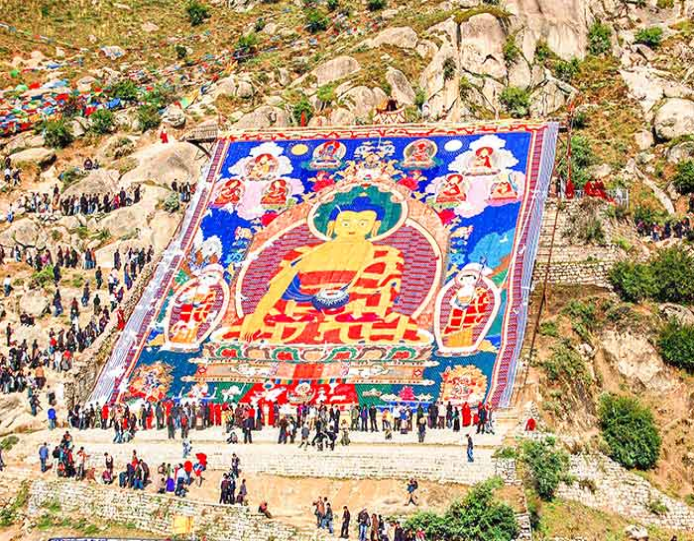
Today is the most important day of the Shoton Festival. You will need to rise very early to join the crowd heading up the mountain path behind Drepung Monastery to the Thangka Unveiling Platform. Experience the powerful atmosphere of pilgrimage as thousands of devotees from across Tibet make their way toward the monastery, prayer wheels in hand, softly chanting as they walk toward this sacred site. The Thangka Unveiling Ceremony at Drepung Monastery is the highlight of every Shoton Festival and draws countless pilgrims and visitors. Before dawn breaks, streams of faithful worshippers flow into the monastery grounds, moving with deep devotion. As the first light of morning appears, the sound of chanting drifts through the monastery. Monks in deep crimson robes solemnly carry out a massive Thangka of Buddha Shakyamuni from the monastery's treasure chamber. Despite its age, the Thangka remains vivid and exquisite, each stroke reflecting generations of craftsmanship and faith. With coordinated effort, monks pull the ropes to gradually unfold the enormous Thangka across the steep hillside behind the monastery. People of all ages gather together in this holy moment, offering prayers for good fortune, harmony, and well-being. The Drepung Shoton Thangka Unveiling is more than a religious ritual - it is a vivid expression of Tibetan cultural heritage and spiritual devotion, leaving a lifelong impression on all who witness it. In the afternoon, take a short drive to Sera Monastery, one of the three great Gelug university monasteries of Tibet. Here, you will engage closely with Tibetan Buddhist culture. The highlight is the famous monks' debate, held daily from around 15:00 to 17:00 (except Sundays). One monk asks questions while standing, using symbolic hand gestures such as clapping and foot-stomping to “activate wisdom,” while the seated monks respond. You may also observe prayer rituals, meditation halls, and learn more about monastic life. Warm Reminder: If the monastery is hosting special ceremonies, the debate session may be cancelled. After the visit, you will be transferred back to your hotel in Lhasa.
Day 4 · (August 13, 2026) Shoton Festival in Lhasa | Potala Palace, Norbulinka (Tibetan Opera)
Meals: Breakfast, Dinner
Accommodation: Lhasa
This morning, you'll first explore the Potala Palace, the most iconic landmark of Tibet and the former winter residence of the Dalai Lamas (1649–1959). After climbing 365 stone steps from the palace gate to the Red Palace, you'll reach the highest ancient palace in the world - standing proudly at 3,700 meters above sea level - and enjoy a stunning panoramic view of Lhasa city. As you wander through its halls, chapels, and sacred shrines honoring past Dalai Lamas, you'll be captivated by the intricate murals, exquisite carvings, dazzling jeweled decorations, and the profound spiritual atmosphere that fills the air. Inside the Potala Palace, countless Tibetan pilgrims can be seen bowing and praying devoutly - for many, visiting this sacred site is truly a journey of a lifetime. Your guide will also share fascinating stories about King Songtsen Gampo, the 33rd ruler of Tibet, who originally built the Potala Palace in the 7th century to honor his marriage to Princess Wencheng of the Tang Dynasty. Potala Palace Visiting Tips All visitors must enter as part of a guided group and may stay inside for a maximum of one hour. Tickets are issued under real-name reservation system. A valid ID or passport is required, and once reserved, rebooking is not allowed within seven days. Entry times are assigned randomly by the Potala Palace Administration; it's not possible to choose your visiting hour. During peak season, your travel group may be divided into smaller sub-groups with different visiting times or guides. Photography is strictly prohibited inside the palace. Afterward, your guide and driver will take you to the Norbulingka Summer Palace to enjoy the Tibetan Opera performances of the Shoton (Yogurt) Festival and appreciate the stunning natural landscape. Don't forget to sample Tibetan yogurt and spend a relaxing day in Norbulingka Park, just like the local Tibetans do. Also known as the “Jeweled Park”, Norbulingka is recognized as a UNESCO World Heritage Site. Built by the 7th Dalai Lama in 1755, it served as the summer residence of successive Dalai Lamas. The complex consists of three main parts: the courtyard in front of the palace, the palace buildings, and the surrounding forest. With over 400 rooms of various sizes, Norbulingka is the largest, most magnificent, and best-preserved palace garden in Tibet. It blends gardening, architecture, and sculpture from Tibetan, Han, and other ethnic traditions. The well-preserved murals, mandalas, and frescoes are fascinating highlights not to be missed. Today, Norbulingka Park is a lively hub of entertainment - filled with dancing, singing, music, and festivities, especially during the annual Shoton (Yogurt) Festival, when you can enjoy authentic Tibetan Opera performances. You can even join local Tibetans for a cheerful outdoor celebration. Special Meal Arranged by AOT: On this day, enjoy a group meal featuring delicious Tibetan or Nepalese cuisine, specially arranged by the AOT team.
Day 5 · (August 14, 2026) Lhasa - Yamdrok Lake - Karola Glacier - Shigatse (370km, 7 hours) | Special Meal at Yamdrok Lake
Meals: Breakfast,Lunch
Accommodation: Shigatse
Today, you'll embark on a scenic drive from Lhasa to Shigatse, Tibet's second-largest city. The journey covers around 370 kilometers and takes 7 hours' drive, with stops to admire two of Tibet's most spectacular natural wonders - Yamdrok Lake and Karola Glacier. In the morning, after about 2-3 hours of driving (110 km), get your camera ready as you approach Kampala Pass (4,797 m). Here, you'll be rewarded with a breathtaking panoramic view of Yamdrok Lake, a turquoise ribbon shimmering among snow-capped mountains. Known as one of Tibet's four sacred lakes (along with Lhamo Latso, Manasarovar, and Namtso), Yamdrok is believed to hold spiritual power - helping Tibetans locate the reincarnated soul of the Dalai Lama. You'll also see locals offering photo opportunities with Tibetan mastiffs, yaks, or goats dressed in traditional ornaments. Specially Arranged Meal at Yamdrok Lake by AOT: Take a break at Yamdrok Lake to enjoy a special Hot Pot arranged by Asia Odyssey Travel. Fresh dish, stunning lake views, totally get relaxed. Also have time to take beautiful photos before or after your meal. In the afternoon, continue driving for about 1.5 hours (87 km) to reach the stunning Karola Glacier (5,012 m) - one of Tibet's three major continental glaciers and a filming site of the movie Red Valley (Hong He Gu). Backed by Naiqin Kangsang Peak (7,191 m), the glacier gleams like a frozen waterfall cascading right beside the highway. You can enjoy the view from your vehicle or take a short, easy walk to the glacier's base. Across the road, admire the majestic snow-capped Mount Kalurong - another highlight of this alpine wonderland. Tips for visiting Karola Glacier: The alitude here is about 5,012 meters, so move slowly and avoid overexertion. The public toilets are very basic -be prepared. Some locals may charge a small fee for taking photos with them or their animals -always confirm before photographing. Afterward, drive about 3.5 hours (170 km) through Gyantse, along the wide Nianchu River Valley, passing through scenic Tibetan villages, vast barley fields, and golden rapeseed flower fields (in summer). Upon arrival in Shigatse (altitude: 3845 meters), check into your hotel and rest well. Warm Reminder: For foreign and Taiwan travelers, registration at the Shigatse Entry & Exit Administration Office is required. Your guide will assist with the process and may adjust the schedule accordingly - please follow their instructions and cooperate as needed.
Day 6 · (August 15, 2026) Shigatse - Mt. Everest | Gyawu La Pass, Rongbuk Monastery, Mt. Everest Base Camp
Meals: Breakfast, Dinner
Accommodation: EBC
Today, your whole group will drive from Shigatse toward to Mount Everest (Qomolangma), the highest mountain on Earth. Along the way, admire the stunning transformation of the landscape as you ascend toward the Himalayas. Gyawu La Pass - the Everest Viewing Platform Follow the famous 108 switchbacks along the Everest Road to reach Gyawu La Pass (5210 m), also known as the Everest Viewing Platform. On clear days, this is one of the few places on Earth where you can see five of the world's highest peaks above 8,000 meters lined up before you - Everest, Lhotse, Makalu, Cho Oyu, and Shishapangma. The panoramic view is awe-inspiring, with the mighty snow peaks stretching endlessly across the horizon. Rongbuk Monastery - the Highest Monastery in the World Continue to Rongbuk Monastery (5154 m), nestled at the foot of the Rongbuk Glacier. It is the highest monastery in the world, belonging to the Nyingma school of Tibetan Buddhism, and is home to both monks and nuns. The monastery is divided into old and new sections - the old one preserves meditation caves believed to have been used by Guru Padmasambhava, while the new section offers a spectacular view of Mount Everest's north face. The white chorten and mani stones at the entrance make for iconic photo compositions - quiet, sacred, and timeless. Everest Base Camp - Touching the Summit of the World Standing at 8,848 meters, Mount Everest straddles the border between China and Nepal in the central Himalayas. The endless glaciers, hanging ice cliffs, and snow-covered ridges create a view of rare beauty and grandeur. Then, head to Everest Base Camp (EBC, 5200 m) - the closest point ordinary travelers can get to the world's highest peak. Surrounded by tented lodges, EBC stands just 19 km in a straight line from Mount Everest's summit. Here, you can truly feel the majesty of the mountain - towering, powerful, and humbling. Many visitors describe this as a once-in-a-lifetime experience, with Everest's sheer presence leaving an unforgettable impression. Warm Tips for Visiting EBC: From Everest Town (50 km from EBC), travelers must transfer to the eco-friendly shuttle bus for the final stretch to Base Camp, and return the next day the same way. Your main driver and vehicle will not accompany you - please bring all essentials with you. Accommodation at EBC is in tented camps (reconstructed in 2025) with improved facilities, now offering twin rooms and a simple dining tent. However, amenities remain basic with shared bathrooms. Supplies are limited due to high altitude, so please be understanding. During winter, if the tent camp is closed due to weather, the group will stay in a guesthouse in Everest Town (or called Tashizom Town) with private bathroom. The altitude and temperature can be extreme -even in summer, nighttime temperatures may drop to 08°C. Please dress warmly or rent a down jacket at Base Camp if needed.
Day 7 · (August 16, 2026) Mt. Everest - Shigatse | EBC, Gyatso La Pass
Meals: Breakfast
Accommodation: Shigatse
Wake up to the crisp morning air at EBC. Take a quiet moment to embrace the majesty of Mount Everest and the surrounding Himalayas. If you wish, begin your day with some gentle yoga or meditation to refresh both body and mind, or enjoy a peaceful walk around the base camp for close-up views of this extraordinary landscape. Tip: If weather permits, you can enjoy the Golden Summit view - one of the most breathtaking sights on Earth. The best seasons are spring (April–May) and autumn (September–November), when the skies are usually clear. You'll need to rise early and take a short hike to the viewing point to see the snowcapped peaks glowing golden in the morning light. After a memorable morning at Everest Base Camp, start your return journey to Shigatse City. En route, make a stop at Gyatso La Pass (5,248 m) - the highest point along the Sino-Nepal Friendship Highway and part of the Mount Everest National Nature Reserve. From the viewing platform, admire the towering peaks of Mount Everest (8,848.86 m), Cho Oyu, Lhotse, and Makalu, all rising above 8,000 meters. The colorful prayer flags fluttering in the wind add a touch of sacred beauty to this spectacular panorama - a perfect spot for photos. Continue your scenic drive back to Shigatse, check into your hotel, and enjoy a relaxing evening with a warm shower after the day's adventure. Overnight in Shigatse.
Day 8 · (August 17, 2026) Shigatse - Lhasa | Tashilunpo Monastery
Meals: Breakfast
Accommodation: Lhasa
This morning, visit Tashilhunpo Monastery, the spiritual heart of Shigatse. Founded in 1447 by Gyalwa Gedun Drup, the 1st Dalai Lama and a disciple of Tsongkhapa, Tashilhunpo Monastery is the largest monastery in Tibet's Tsang region and one of the six great Gelug monasteries alongside Drepung, Sera, Ganden, Labrang, and Ta'er. It has long been the traditional seat of the Panchen Lamas, the second-highest incarnation lineage in Tibetan Buddhism after the Dalai Lama. At its height, the monastery housed over 5,000 monks and included more than 3,000 rooms, 50 affiliated temples, and 30 manors and pastures. Today, you can still sense its grandeur as you explore its vast complex of prayer halls, courtyards, and golden roofs glinting under the sun. Highlights of Tashihunpo Monastery: Admir the Maitreya (Future Buddha) Chapel, which enshrines a magnificent bronze statue of the Maitreya Buddha -made with over 115 tons of copper, 250 kg of gold, and adorned with more than 1,400 precious jewels including diamonds and pearls. Pay repect to the sacred stupas (reliquary chortens) of successive Panchen Lamas, exquisitely crafted with gold, silver, coral, pearls, turquoise, and silk. Enjoy a panoramic view of Shigatse city and the serene monastic life, where monks in crimson robes chant sutras echoing through the halls. After visiting Tashilhunpo Monastery, drive back to Lhasa along the scenic Friendship Highway, following the Yarlung Tsangpo River. The journey takes about 4.5-5 hours (270 km). Upon arrival, check into your hotel and relax for the night. Overnight in Lhasa.
Day 9 · (August 18, 2026) Lhasa Departure | Hotel Check-out and Airport Transfer
Meals: Breakfast
After breakfast, it's time to say goodbye to the holy city of Lhasa. Your guide and driver will escort you to Lhasa Gonggar Airport or Lhasa Railway Station. Take your flight or train to next destination or go home. Travel Tips: The drive from downtown Lhasa to the airport takes about 1 hour, so we recommend booking flights departing after 10:00 AM. Please share your flight or train schedule with us in advance to ensure a smooth transfer. Kindly provide accurate flight or train booking details so that we can arrange the group's complimentary shared transfer efficiently. Thank you for choosing Asia Odyssey Travel for Tibet Group Tour. We hope to see you on your next journey!
中文行程
2026年西藏雪顿节9日游:酸奶节、藏戏与珠峰大本营
第1天 · 2026年8月10日 抵达拉萨(海拔3650米):接机/接站服务与高原适应
扎西德勒!欢迎来到西藏自治区首府拉萨!抵达拉萨贡嘎国际机场或拉萨火车站后,我们友好的藏族导游将为您献上哈达(传统白色丝巾),并送上温暖的祝福。(提示:请提前告知我们您的交通方式和抵达时间。) 随后,导游和司机将送您前往拉萨市区的酒店。(提示:机场位于市区东南方向约60公里处,车程约1至1.5小时。) 办理入住后,请利用当天剩余的时间休息放松,适应拉萨的高海拔(3650米)。在开始精彩的西藏之旅前,让身体逐步适应非常重要。 第一天航班预订建议: 由于第二天清晨您需要早起参加哲蚌寺晒佛仪式,我们强烈建议您预订第一天上午抵达拉萨的航班。这样您能好好休息,为第二天的活动保存体力。 拉萨第一天实用提醒: 好好休息,保持平静。这是预防高原反应的最好方法。 避免剧烈活动,第一晚最好不要洗澡,以防感冒。 不要饮酒,多喝水,吃水果,避免吃得太油腻。 如有需要,可以准备红景天、西洋参含片或高原安等草药或补充氧气,以帮助适应高原环境。 请始终听从当地导游的建议。如果感觉不适,请告知导游并及时就医。 住宿:拉萨
第2天 · 2026年8月11日 拉萨市区游:大昭寺、八廓街与藏文化体验
早餐后,您将随团队参观大昭寺。大昭寺已有1300多年历史,是拉萨重要的佛教圣地。远远望去,可以看到无数虔诚的信徒在寺前叩拜。不妨停留片刻,看一看这令人动容的场景,感受藏传佛教信徒坚定的信仰。 相传大昭寺由松赞干布为两位妻子——唐朝文成公主和尼泊尔尺尊公主而建。大昭寺的意思是“佛之屋”,寺内供奉着一尊12岁释迦牟尼等身像,是佛教世界最神圣的宝物之一。因此,大昭寺成为西藏最重要的朝圣地。 留出时间参观寺庙精巧的建筑,欣赏色彩丰富的壁画、华丽的装饰和精美的雕刻,感受藏族工艺的精髓。从二楼可以俯瞰下方热闹的八廓街。 大昭寺参观提示: 参观时间:约1小时。 入场需在7:00-23:59之间通过“大昭寺预约”微信小程序实名预约次日门票。预约名额有限,请在导游协助下提前预订。 大昭寺是仍在使用的宗教场所。如遇重要宗教仪式或特殊活动,可能限制进入,感谢您的理解。 参观结束后,走到外面的八廓街。这里曾是围绕寺庙的传统转经道。如今,这里十分热闹,弥漫着香火气味,也能听到朝圣者的诵经声。您可以在茶馆品尝酥油茶,穿藏族服饰拍照,或挑选来自西藏、尼泊尔和印度的特色手工艺品和纪念品。 今天下午,前往拉萨传统手工艺艺术中心,体验传统藏族艺术。您可以参与制作藏香、练习藏文书法,并了解传统木版印刷的奥秘。 藏香通常在佛教仪式和典礼中作为供品焚烧。其成分通常包括杜松、檀香、雪松、肉桂、丁香和多种草药。 除了制作藏香,您还可以观看当地工匠演示完整流程。工匠会教您藏文书法,并帮助您用藏文写下自己的名字或祝福。这是一份有意义的纪念品,可以带回家留作回忆。 游览结束后,送您返回拉萨的酒店。 用餐:早餐 住宿:拉萨
第3天 · (2026年8月12日) 拉萨雪顿节:哲蚌寺、色拉寺
今天是雪顿节最重要的一天。您需要很早起床,加入前往哲蚌寺后山展佛台的人流。感受成千上万来自西藏各地的信徒手持转经筒,低声诵经,走向这一圣地的强大朝圣氛围。 哲蚌寺的展佛仪式是每个雪顿节的重头戏,吸引无数朝圣者和游客。破晓之前,虔诚的信徒如潮水般涌入寺院,怀着深深的虔诚移动。当清晨第一缕光线出现时,诵经声在寺院中飘荡。身披深红色袈裟的僧侣们庄重地从寺院宝库中抬出一幅巨大的释迦牟尼佛像唐卡。尽管年代久远,唐卡依然鲜艳精美,每一笔都映照出世代相传的工艺与信仰。 僧侣们齐心协力拉动绳索,将巨大的唐卡逐渐展开在寺院后陡峭的山坡上。各年龄段的人们聚集在这一神圣时刻,祈求好运、和谐与安康。哲蚌寺雪顿节展佛不仅仅是一种宗教仪式——它是藏族文化遗产与精神虔诚的生动表达,给所有目睹者留下终生难忘的印象。 下午,乘车短途前往色拉寺,这是西藏格鲁派三大佛学院寺院之一。在这里,您将亲密接触藏传佛教文化。亮点是著名的僧人辩经,每天大约15:00至17:00举行(周日除外)。一名僧人站立提问,使用拍手、跺脚等象征性手势来“激活智慧”,而坐着的僧人们回应。您还可以观察祈祷仪式、冥想殿堂,并了解更多寺院生活。 温馨提示:如果寺院举办特别法会,辩经可能会取消。 参观结束后,您将被送回拉萨的酒店。 用餐:早餐 住宿:拉萨
第4天 · (2026年8月13日)拉萨雪顿节:布达拉宫与罗布林卡藏戏
今天上午,您将首先参观布达拉宫,这是西藏最具标志性的地标,也是达赖喇嘛曾经的冬宫(1649–1959)。从宫门攀登365级石阶到达红宫后,您将抵达世界上海拔最高的古代宫殿,它傲然屹立于海拔3700米处,您还能欣赏拉萨城的壮丽全景。 漫步于殿堂、礼拜堂和供奉历代达赖喇嘛的神圣殿宇时,您会被精美的壁画、精致的雕刻、耀眼的珠宝装饰以及弥漫在空气中的浓厚宗教氛围所吸引。在布达拉宫内部,可以看到无数藏族朝圣者虔诚地叩拜和祈祷——对许多人来说,参观这一圣地确实是一生一次的旅程。 您的导游还将分享关于松赞干布的故事,他是西藏第33代赞普,最初于7世纪建造布达拉宫,以纪念他与唐朝文成公主的联姻。 布达拉宫参观提示 所有游客必须作为导游团体的一部分进入,且在内部最多停留一小时。 门票实行实名预订制。需要有效身份证件或护照,且一旦预订,七天内不允许重新预订。 进入时间由布达拉宫管理处随机分配;无法选择您的参观时间。 旺季期间,您的旅行团可能会被分成更小的子团体,有不同的参观时间或导游。 宫内严禁拍照。 之后,您的导游和司机将带您前往罗布林卡夏宫,欣赏雪顿(酸奶)节的藏戏表演,并欣赏令人惊叹的自然景观。别忘了品尝藏族酸奶,像当地藏族人一样在罗布林卡公园度过轻松的一天。 罗布林卡也被称为“宝贝园林”,被认定为联合国教科文组织世界遗产。它由第七世达赖喇嘛于1755年建造,曾作为历代达赖喇嘛的夏宫。整个建筑群由三个主要部分组成:宫殿前的庭院、宫殿建筑和周围的森林。 罗布林卡拥有400多间大小不一的房间,是西藏最大、最宏伟、保存最完好的宫殿园林。它融合了藏族、汉族和其他民族传统的园艺、建筑和雕塑。保存完好的壁画、坛城和壁画是令人着迷的亮点,不容错过。 如今,罗布林卡公园是一个热闹的娱乐中心——充满了舞蹈、歌唱、音乐和庆典,尤其是在一年一度的雪顿(酸奶)节期间,您可以欣赏到正宗的藏戏表演。您甚至可以加入当地藏族人,一起进行愉快的户外庆祝活动。 AOT特别安排的餐食: 在这一天,享受由AOT团队特别安排的团体餐,品尝美味的藏族或尼泊尔菜肴。 用餐:早餐、晚餐 住宿:拉萨
第5天 · (2026年8月14日)拉萨 - 羊卓雍措 - 卡若拉冰川 - 日喀则(370公里,7小时)- 羊卓雍措特色餐
今天,您将从拉萨出发,前往西藏第二大城市日喀则,沿途欣赏风景。全程约370公里,车程约7小时,途中会停留欣赏西藏最壮观的两大自然景观——羊卓雍措和卡若拉冰川。 上午驱车约2-3小时(110公里)后,当您接近岗巴拉山口(海拔4797米)时,请准备好相机。在这里,您将看到羊卓雍措令人惊叹的全景,它像一条碧绿的丝带在雪山间闪耀。羊卓雍措是西藏四大圣湖之一(与拉姆拉措、玛旁雍措和纳木措并列),人们相信它拥有精神力量——帮助藏民寻找达赖喇嘛的转世灵童。您还会看到当地人与藏獒、牦牛或穿着传统装饰的山羊合影,供游客拍照。 亚洲奥德赛旅游特别安排在羊卓雍措用餐: 在羊卓雍措稍作休息,享用亚洲奥德赛旅游安排的特色火锅。新鲜的菜肴、迷人的湖景,让您彻底放松。餐前或餐后还有时间拍摄美丽的照片。 下午,继续驱车约1.5小时(87公里),抵达令人惊叹的卡若拉冰川(海拔5012米)——西藏三大大陆型冰川之一,也是电影《红河谷》的拍摄地。冰川背靠乃钦康桑峰(海拔7191米),像一条冻结的瀑布在公路旁闪耀。您可以在车内欣赏美景,或轻松步行一小段到冰川脚下。在马路对面,欣赏雄伟的卡鲁雪峰——这片高山仙境中的另一亮点。 游览卡若拉冰川的提示: 这里海拔约5012米,请缓慢行动,避免过度劳累。 公共厕所非常简陋——请做好准备。 一些当地人可能会对与他们或他们的动物拍照收取少量费用——拍照前请务必确认。 之后,驱车约3.5小时(170公里),途经江孜,沿着宽阔的年楚河谷行驶,穿过风景如画的藏族村庄、广阔的青稞田和金色的油菜花田(夏季)。抵达日喀则(海拔3845米)后,入住酒店并好好休息。 温馨提示: 对于外国和台湾游客,需要在日喀则出入境管理办公室进行登记。您的导游将协助办理,并可能相应调整行程——请听从他们的指示并配合。 用餐:早餐、午餐 住宿:日喀则
第6天 · (2026年8月15日)日喀则至珠穆朗玛峰:加乌拉山口、绒布寺、珠峰大本营
今天,全队将从日喀则出发,驱车前往地球最高峰珠穆朗玛峰(Qomolangma)。沿途随着海拔逐渐升高,您可以欣赏到喜马拉雅山脉一带不断变化的壮丽景色。 加乌拉山口——珠峰观景台 沿着珠峰公路上著名的108道拐前行,抵达加乌拉山口(5210米),这里也被称为珠峰观景台。天气晴朗时,这里是地球上为数不多可以同时看到五座海拔8000米以上高峰的地方——珠穆朗玛峰、洛子峰、马卡鲁峰、卓奥友峰和希夏邦马峰一字排开。全景令人震撼,巍峨的雪峰在地平线上绵延不绝。 绒布寺——世界海拔最高的寺院 继续前往绒布寺(5154米),它坐落在绒布冰川脚下。这是世界上海拔最高的寺院,属于藏传佛教宁玛派,僧尼同住。寺院分为新旧两部分——旧寺保存着据信莲花生大师曾使用过的修行洞,新寺则可以欣赏到珠穆朗玛峰北坡的壮观景色。入口处的白塔和玛尼石是标志性的拍照取景处——宁静、神圣、历经岁月。 珠峰大本营——靠近世界之巅 珠穆朗玛峰海拔8848米,横跨中国与尼泊尔边境,位于喜马拉雅山脉中段。无尽的冰川、悬冰崖和积雪覆盖的山脊,构成罕见而壮丽的美景。 随后前往珠峰大本营(EBC,5200米)——这是普通旅行者能够到达的、距离世界最高峰最近的地点。大本营周围环绕着帐篷旅馆,与珠穆朗玛峰顶的直线距离仅19公里。在这里,您可以真切感受到这座山峰的威严——高耸、强大、令人敬畏。许多游客将这一刻描述为一生一次的体验,珠峰的磅礴气势给人留下难忘的印象。 游览珠峰大本营温馨提示: 从珠峰小镇(距大本营50公里)出发,游客必须换乘环保接驳车前往大本营的最后一段路程,次日以同样方式返回。您的主司机和车辆不会随行——请随身携带所有必需品。 大本营住宿为帐篷营地(2025年重建),设施有所改善,现在提供双人间和简易用餐帐篷。但设施仍然比较基础,为共用卫生间。由于高海拔,物资供应有限,敬请理解。 冬季,如果帐篷营地因天气原因关闭,团队将入住珠峰小镇(或称扎西宗镇)的客栈,带独立卫生间。 海拔和温度可能非常极端——即使在夏季,夜间温度也可能降至8°C。请穿着保暖,如有需要可在珠峰大本营租用羽绒服。 用餐:早餐、晚餐 住宿:珠峰大本营
第7天 · (2026年8月16日)珠穆朗玛峰—日喀则|珠峰大本营、加措拉山口
在珠峰大本营清新的晨风中醒来。静享片刻,感受珠穆朗玛峰与周围喜马拉雅山脉的壮丽。如果愿意,可以轻柔的瑜伽或冥想开启新的一天,让身心焕然一新,或者在基地营周围悠闲散步,近距离欣赏这非凡的景观。 提示:如果天气允许,您可以欣赏金顶景观——地球上最令人叹为观止的景象之一。最佳季节是春季(4月至5月)和秋季(9月至11月),此时天空通常晴朗。您需要早起,短途徒步至观景点,观看积雪覆盖的山峰在晨光中闪耀金光。 在珠峰大本营度过难忘的早晨后,开始返回日喀则市的旅程。途中,在加措拉山口(5,248米)停留——这是中尼友谊公路上的最高点,也是珠穆朗玛峰国家级自然保护区的一部分。从观景台欣赏珠穆朗玛峰(8,848.86米)、卓奥友峰、洛子峰和马卡鲁峰的巍峨山峰,它们都海拔超过8,000米。五彩经幡在风中飘扬,为这壮丽的全景增添了一抹神圣的美丽——是拍照的绝佳地点。 继续风景优美的车程返回日喀则,入住酒店,在一天的冒险后享受温暖淋浴的轻松夜晚。夜宿日喀则。 用餐:早餐 住宿:日喀则
第8天 · (2026年8月17日)日喀则—拉萨|扎什伦布寺
今天上午,参观扎什伦布寺,这是日喀则重要的佛教圣地。 扎什伦布寺由第一世达赖喇嘛根敦珠巴于1447年创建,他是宗喀巴的弟子。该寺是西藏后藏地区最大的寺院,也是与哲蚌寺、色拉寺、甘丹寺、拉卜楞寺和塔尔寺齐名的格鲁派六大寺之一。它长期以来一直是班禅喇嘛的传统驻锡地。班禅喇嘛是藏传佛教中仅次于达赖喇嘛的第二大转世传承。 该寺鼎盛时期曾有超过5000名僧侣,包括3000多个房间、50座附属寺庙以及30个庄园和牧场。今天,当您探索其庞大的殿堂、庭院和阳光下闪耀的金顶建筑群时,仍能感受到它的宏伟。 扎什伦布寺的亮点: 欣赏弥勒佛(未来佛)殿,殿内供奉着一尊宏伟的弥勒佛铜像,用超过115吨铜、250公斤黄金制成,并饰有包括钻石和珍珠在内的1400多颗珍贵宝石。 朝拜历代班禅喇嘛的圣塔(舍利塔),这些塔用金、银、珊瑚、珍珠、绿松石和丝绸精美制作而成。 欣赏日喀则市的全景和宁静的寺院生活,身穿深红色僧袍的僧侣诵经声在殿堂中回荡。 参观扎什伦布寺后,沿风景优美的友谊公路,顺着雅鲁藏布江返回拉萨。行程约需4.5-5小时(270公里)。抵达后,入住酒店休息一晚。 夜宿拉萨。 用餐:早餐 住宿:拉萨
第9天 · 2026年8月18日 拉萨送团 酒店退房及送机
早餐后,就要告别圣城拉萨了。导游和司机会送您前往拉萨贡嘎机场或拉萨火车站。您将搭乘航班或火车前往下一个目的地,或返回家中。 旅行小贴士: 从拉萨市区到机场的车程约1小时,因此建议预订上午10:00之后起飞的航班。 请提前将您的航班或火车时刻告知我们,以确保送站顺利。 请提供准确的航班或火车预订信息,以便我们高效安排团队的免费共享送站服务。 感谢您选择亚洲奥德赛旅游的西藏团队游。期待在您的下一段旅程中再相见! 用餐:早餐